3D printing Interesting facts

3D Know-How

when ideas and materials merge into components.

The Procedure In overview


FFF Procedure

In Fused Filament Fabrication, the workpiece is built up layer by layer from a meltable plastic wire, known as filament.

3DGence Industry F420
3DGence Industry F340

Polymer plastics
Elastomeric plastics
Special plastics/composite plastics

● ● ○ ○ Design freedom


● ● ● ○ No support structure


● ○ ○ ○ Moving parts


● ● ● ● Variety of materials


● ● ● ● UV-resistant


● ● ● ○ Surface structure


● ● ● ● Suitable for mass production


● ● ● ● Heat-resistant


● ● ● ● Water resistance


● ● ● ○ Mechanical load

Service Level Agreement Procedure

Stereolithography involves hardening resin layer by layer with the aid of UV light lasers. This process allows very precise, smooth surfaces and delicate structures to be created in rapid prototyping.

Formlabs Form 4
Formlabs Form 4L

Resins with a wide variety of properties, such as Flexible Elastic, Tough, High Temp…

● ● ● ○ Design freedom


● ● ○ ○ No support structure


● ● ● ○ Moving parts


● ● ● ○ Variety of materials


○ ○ ○ ○ UV-resistant


Surface Structure


● ○ ○ ○ Suitable for mass production


● ● ● ○ Temperature-resistant


● ● ● ● Water resistance


● ● ● ○ Mechanical load

SLS Procedure

Selective laser sintering melts polymers or elastomers layer by layer using laser technology. It is a generative powder-bed process that can produce complex three-dimensional geometries without support structures.

Sintratec S2

e.g. PA12, TPE

● ● ● ● Design freedom


No support structure


● ● ● ● Moving parts


○ ○ ○ ○ Variety of materials


● ● ● ● UV-resistant


● ● ○ ○ Surface texture


● ● ● ● Suitable for mass production


● ● ● ○ Temperature-resistant


● ○ ○ ○ Water resistance


● ● ● ● Mechanical load

The Materials In overview

Powder | SLS

Powder materials are professional, high-end materials made from plastics or metals for selective laser sintering (SLS), which can be used in a wide range of applications.

Some application areas:

  • Robust, customer-specific individual/serial production
  • Temperature-resistant prototyping parts for functional testing
  • Flexible parts with high elongation (up to > 400%)

The best-known plastic powders are made of nylon as a polymer (PA) with properties such as rigidity and strength, and a thermoplastic elastomer (TPE), which is soft and flexible. Sintratec powders, for example, are considered tried-and-tested industrial-grade nylon powders. We would be happy to provide you with technical and safety data sheets.

Another area of SLS, then called SLM (Selective Laser Melting), is the layer-by-layer melting and manufacturing using high-performance lasers and processing of various metals such as tool steel, titanium, nickel, or aluminium.

The high-tech polymer Nylon 12 (PA12) has been specifically developed for use in additive manufacturing. The powder guarantees high stability and high resolution, particularly with fine and complex objects.

Density
0.95 g/cm³

Izod notch toughness
43 years old, male

Expansion @ Break
8 % *

Heat deflection temperature
177 °C

Bending strength
47 MPa

Supported wall thickness min.
0.5 mm

Materials and printing properties (material density and laser speed) can be worked with that support this material:

The elastomer powder Sintratec TPE was developed to print rubber-like parts with high flexibility. The material is astonishingly stretchable and retains its shape. This means it offers the ideal characteristics for applications with dynamic components that need to return precisely to their original shape after use.

Density
0.95g/cm3 *

Izod notch toughness
60 J/M

Expansion @ Break
438 % *

Heat deflection temperature
104 °C

Bending strength
29 MPa

Supported wall thickness min.
1 mm

The open parameters of Sintratec products allow for working with different materials and printing properties (material density and laser speed).

Filament | FFF

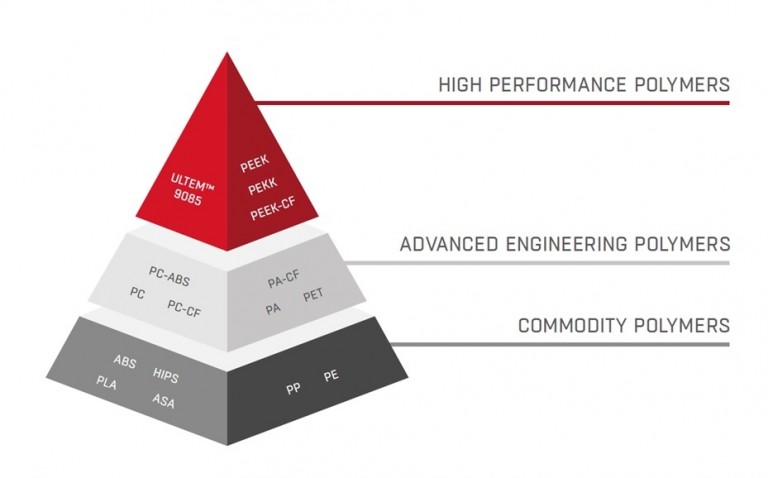
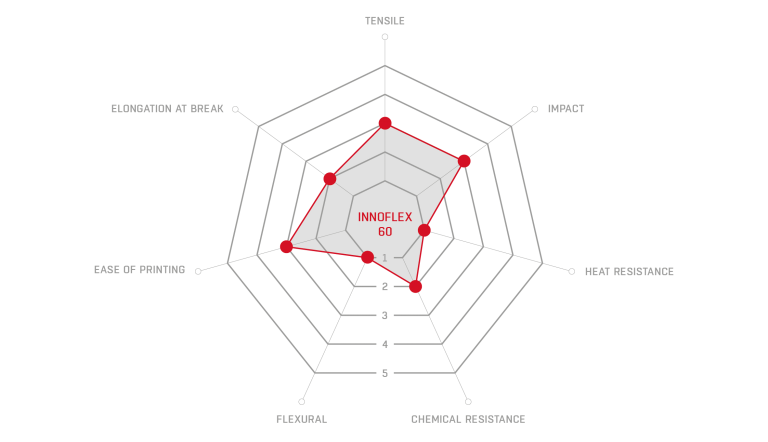
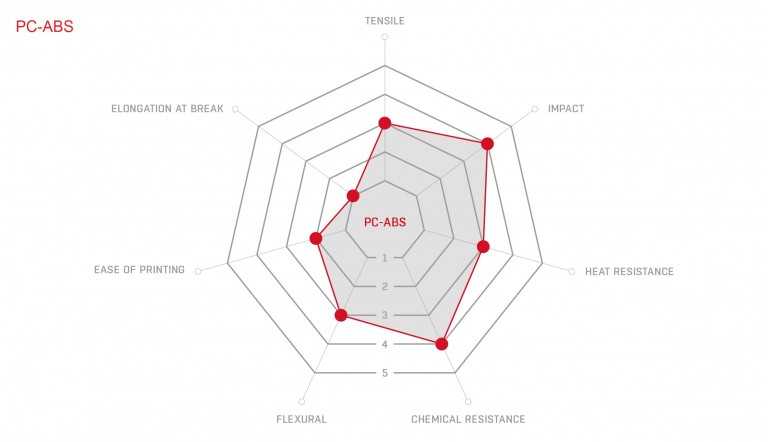
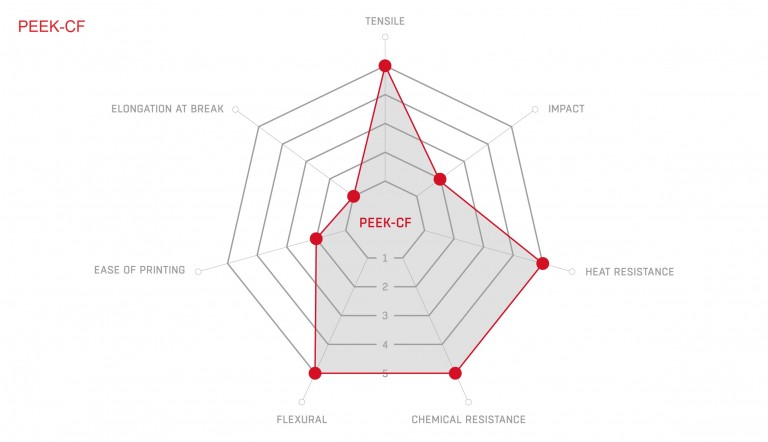
Filaments are wires on spools made from various polymers or elastomers. Plastics with different properties are offered for a wide range of requirements and applications. For quick and cost-effective prototypes, commodity filaments such as PLA, ABS, and ASA are used. More technically demanding components are produced with engineering filaments, including ASA, PC, PA, and PC-ABS. Components requiring high technical properties are manufactured using high-performance filaments. These high-performance filaments include PEI/Ultem, PEEK, and PEKK, among others.

These aforementioned plastics (e.g. ABS, PC, PEEK…) offer the possibility of working with materials that correspond to the finished products. A simulation of necessary material properties is not required here.

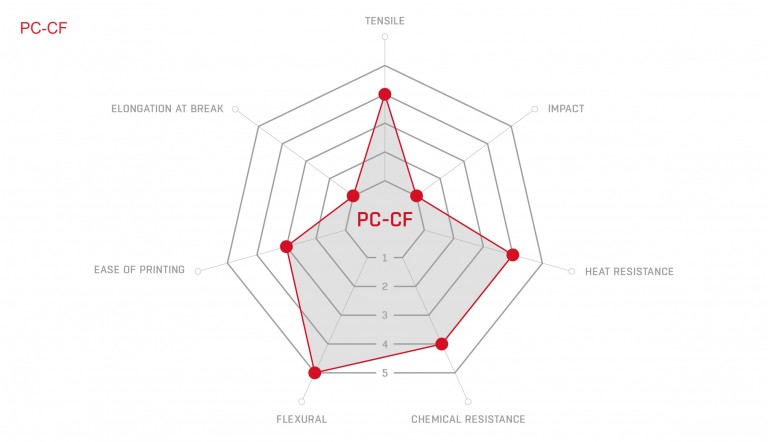
Special Filaments. In addition to the filaments mentioned, numerous other plastics with additional properties are offered, for example ABS or PC reinforced with carbon fibres (CF) to form ABS-CF or PC-CF. These materials offer improved properties, such as heat and chemical resistance or stiffness, due to the addition of these fibres.

Acrylonitrile Butadiene Styrene

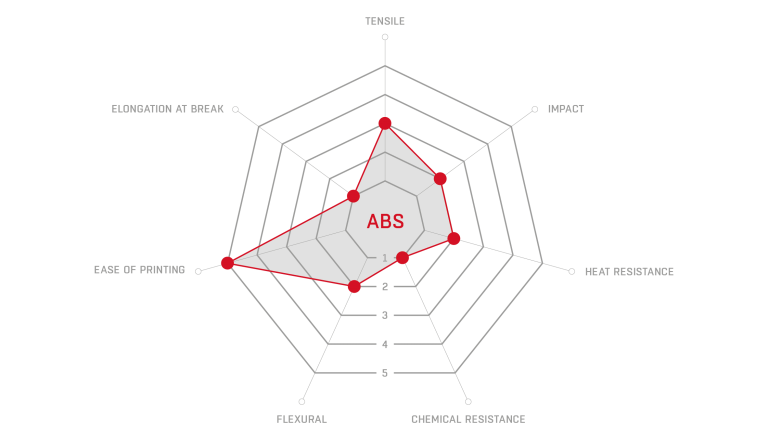
ABS is considered one of the most popular thermoplastic materials, irrespective of the manufacturing process used. It is easy to machine and exhibits good mechanical properties. ABS is well-suited for mechanical post-processing, such as drilling or thread cutting. It also has a relatively high material hardness and possesses excellent scratch resistance.

ABS also has basic acid, base, and alcohol resistance. It can be used for printing prototypes, tooling, or for series production that is within the temperature range of -20 to 80°C or is subjected to mechanical stress. ABS is recyclable. The surface of models made from ABS is matt, with colours being less saturated than with models made from PLA. ABS is not UV-light resistant.

Suitable for, among others:

  • Prototypes
  • Devices
  • moving parts (e.g. springs)

Acrylonitrile Styrene Acrylate

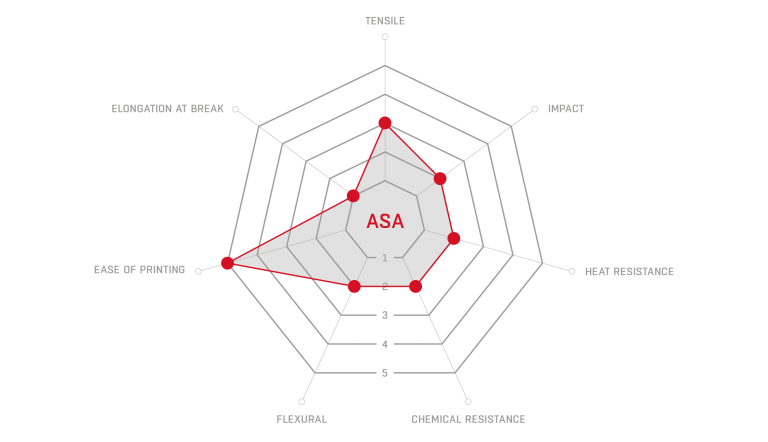
ASA is a thermoplastic polymer that combines good mechanical properties with UV resistance, and allows for operation in high humidity. The material is break-resistant and exhibits the best weathering resistance among acrylonitrile-based polymers. ASA has high dimensional stability and good chemical resistance. Due to its chemical composition, which is similar to ABS, the mechanical properties as well as the 3D printing characteristics of ASA are also very similar. ASA is suitable for use in prototyping for functional prototypes, outdoors, and therefore for many applications in the automotive and aerospace industries.

Polypropylene

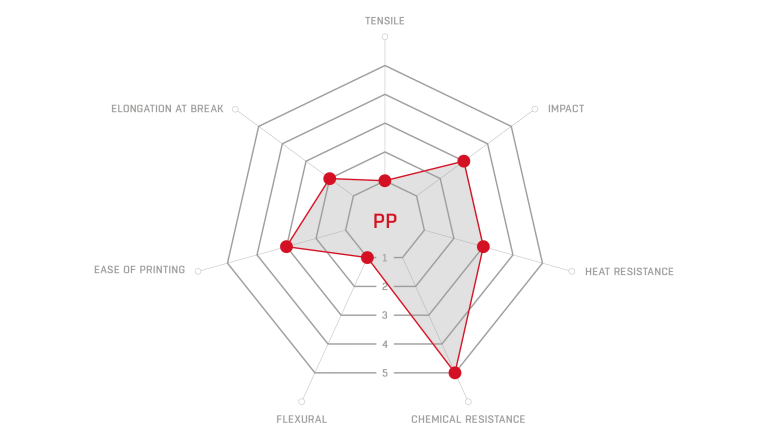
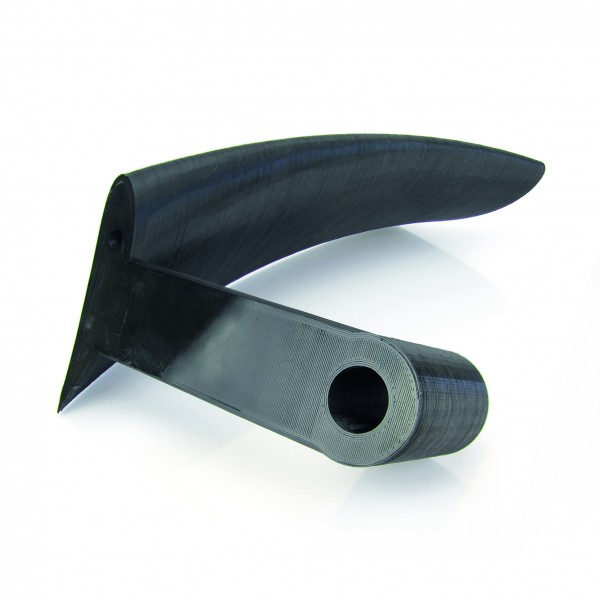
Components made from PP have a low coefficient of friction, are perceived as aesthetically pleasing and offer a smooth surface. This makes PP a popular choice for end products in the consumer sector. PP is also characterised by high electrical resistance, which allows printed components to be used as electrical insulators. Furthermore, PP is distinguished by a good strength-to-weight ratio. PP is a filament that tends to warp significantly in the component during extrusion.

Polylactic acid

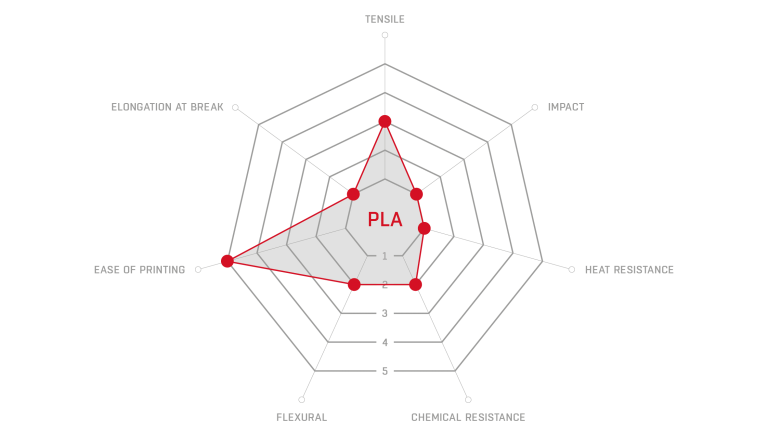
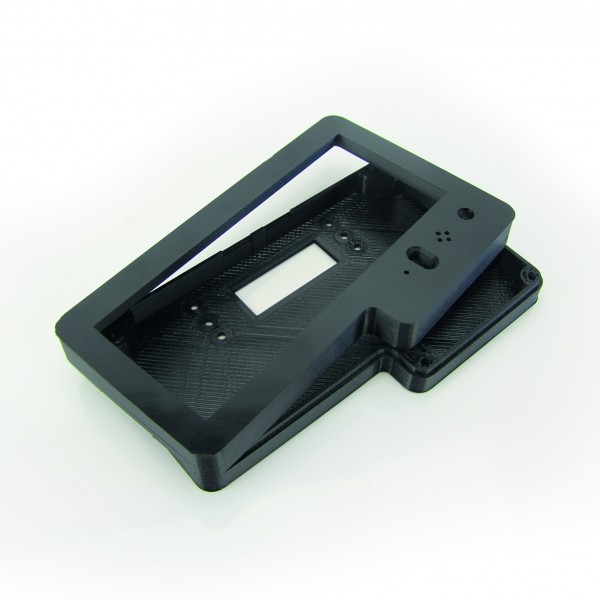
PLA is a biodegradable thermoplastic polymer produced from renewable raw materials. However, the decomposition of this plastic takes many decades. Due to its low extrusion temperature, ease of post-processing, and simple processing with a 3D printer, PLA is one of the most popular thermoplastic filaments. It is also the most cost-effective material among filaments. The models have very saturated colours and glossy surfaces. Due to its lack of technical and industrial properties, it is often used for initial rapid prototypes or sample pieces.

Polycarbonate 

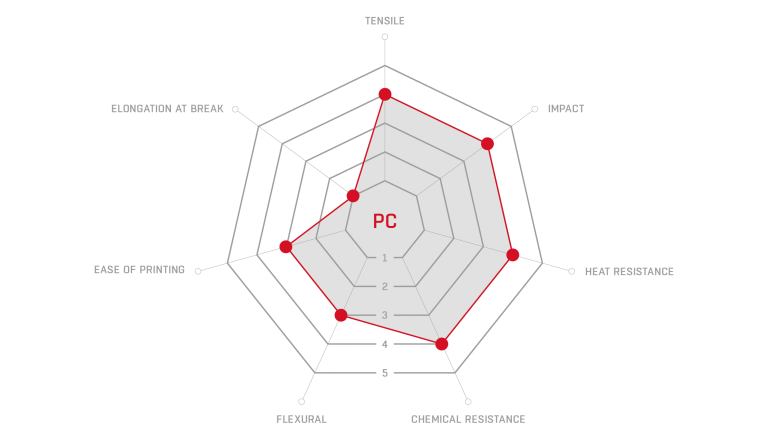
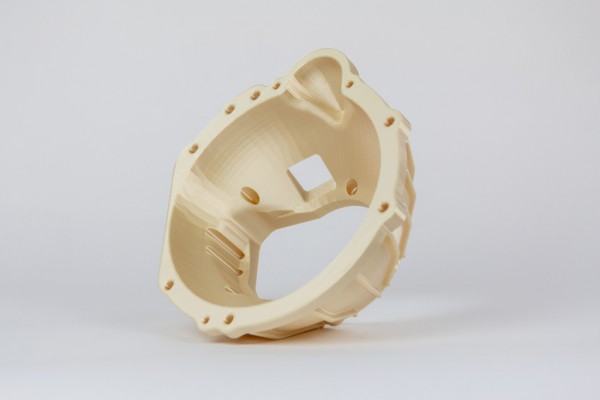
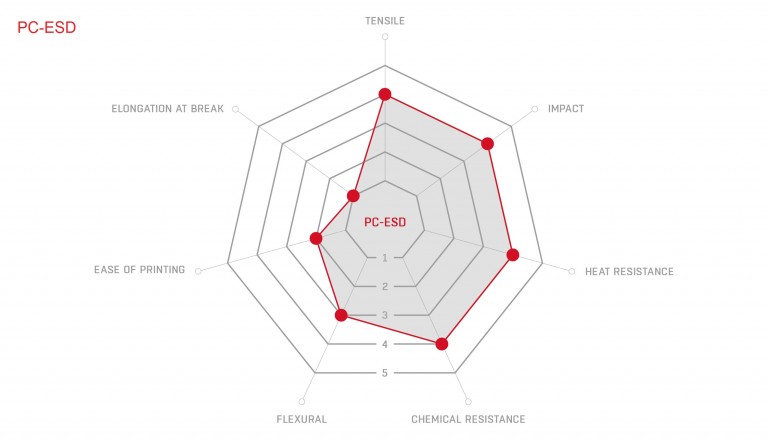
PC is one of the most durable, toughest, and heat-resistant technical polymers. High dimensional accuracy, increased stiffness, and impact resistance make this material particularly suitable for the production of demanding and durable models. Polycarbonate is also considered an electrical insulator. It requires printing temperatures of almost 300°C, is sensitive to moisture, and is prone to warping. Constant printing conditions must be ensured, preferably in an enclosed and heated print chamber. PC filament is a very demanding material, and processing it in additive manufacturing requires high-quality industrial 3D printers.

PEI 9085 (ULTEM)

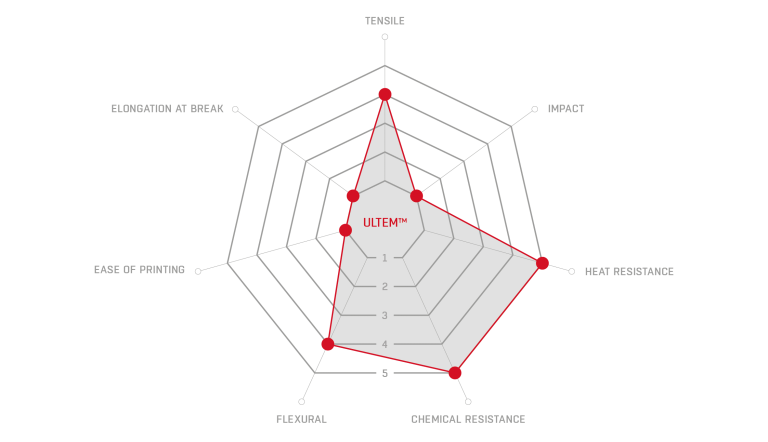
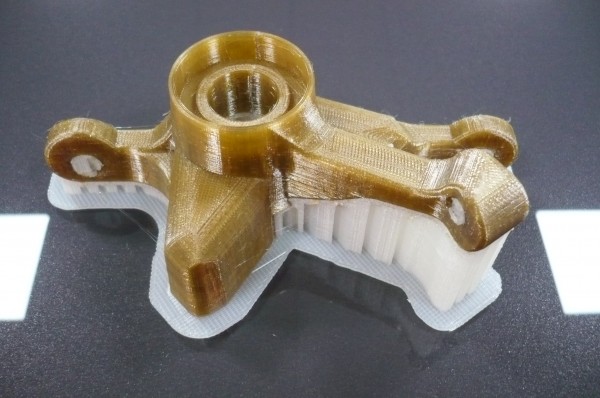
PEI (Polyetherimide) is the original name for this high-performance plastic. It is manufactured from fibres of various polymer types, most commonly AM9085F. PEI is better known under the brand name ULTEM™ from the company SABIC.

To achieve good print quality, the printing process must be carried out in a highly heatable build chamber. The temperature in the build chamber must not fall below 170°C, and the heat must be distributed evenly. In addition, there is a build platform that corresponds to the material and is a prerequisite for good quality. The unique properties of Ultem include heat resistance of up to 180°C, resistance to natural and synthetic solvents, high dielectric strength, and good thermal conductivity. Further unique properties are low flammability and toxicity.

Due to these exceptional properties, this material is used in the railway, aviation, and automotive industries. Components made from ULTEM are often used as replacements for metal parts.

Polyether ether ketone Polyetheretherketone

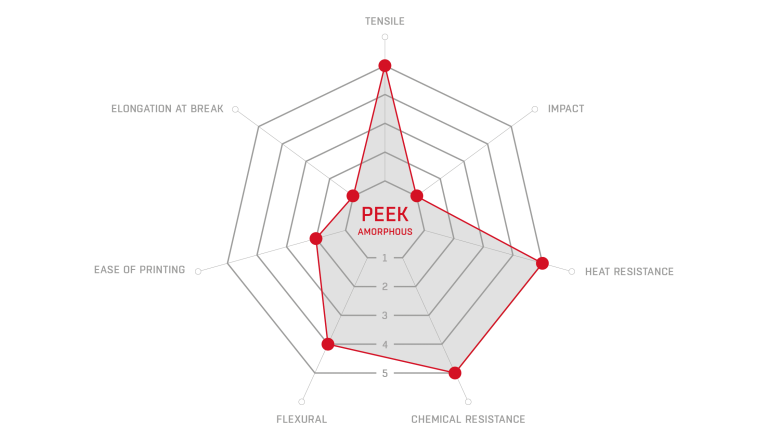
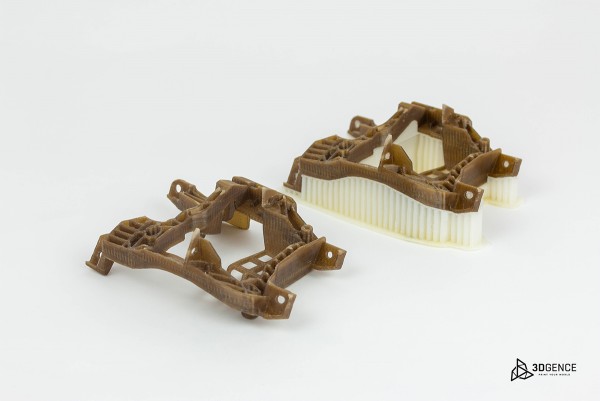
The sectors that use PEEK are diverse, including mechanical and plant engineering, the automotive industry, the marine industry, the nuclear energy industry, the oil industry, the electronics industry, the aviation industry, and the medical industry. Components made from this material are often chosen as replacements for metal parts. The maximum product properties of PEEK are achieved in the semi-crystalline state, which can be obtained by subsequently heating components in a suitable oven. To achieve high dimensional accuracy of components and the desired quality, there are high demands on the 3D printer, such as a high extrusion temperature, an actively and evenly heated print chamber, and a heated print platform.

Components made of PEEK exhibit high resistance to various chemicals, material fatigue, and mechanical wear. This material possesses exceptionally high heat resistance as well as very good mechanical properties. Consequently, the material is equally valued and utilised across many industrial sectors.

PEKK Polyetherketonketon

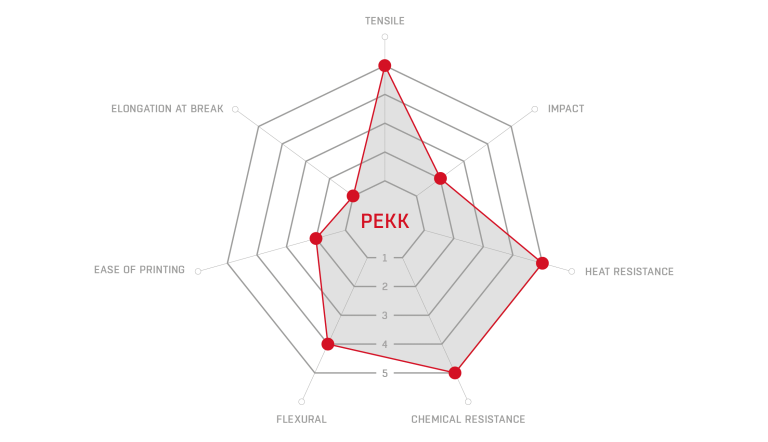
PEKK is a high-performance, universally applicable polymer belonging to the PAEK family. PEKK is printed in an amorphous state and is not post-processed in an oven. The material requires dry storage facilities as it is sensitive to moisture. Due to its exceptional properties, PEKK is often used as a replacement for components made from metal alloys.

PEKK is a universally applicable plastic that combines chemical resistance, flame retardancy, and mechanical properties, which are considered the best among all known thermoplastics. Its crystallisation rate is slightly lower than that of PEEK, which makes control considerably easier and can lead to better layer adhesion, thereby achieving even better tensile strength in every axis compared to PEEK. This material is one of the best examples of polymers with high-strength characteristics.

TPE Thermoplastic Elastomers

Elastomers are elastic plastics that have different Shore hardnesses. Shore hardness indicates how elastic a plastic is and is measured according to DIN. These Shore DINs are divided alphanumerically into A-D and 0-100. A gummy bear has Shore 10A and a car tyre Shore 50 – 70A or, converted, Shore 12 – 22D, as well as hard plastic Shore 100A. Rubber starts from approx. Shore 22D to 36D. Processing elastomers successfully using the FFF method is difficult due to their soft material properties and is therefore dependent on the Shore hardness of the filament.

Support Material – Support material for design freedom

Support materials are filaments that are used in addition to and in combination with the build material during the manufacturing of an object, in order to enable geometries (overhangs, cavities, undercuts, etc.) that are difficult or impossible to remove manually. A distinction is made between three types of support materials: water-soluble, lye-soluble, and break-away filaments. Not all filaments, such as ABS, can be combined with support materials.

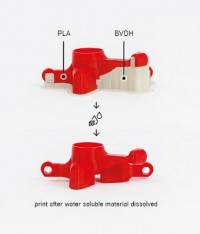
BVOH. It is a water-soluble high-quality support material. The supports no longer need to be manually removed. By rinsing out the support material after the component has been manufactured, it can be removed without damage. It can be used in conjunction with various polymers, including PLA and PP, while ensuring easy extrusion and good adhesion between individual layers.

ESM-10. A support material that is dissolved in a lye. This support material is designed for combination and use with filaments from the engineering and high-performance sectors such as ABS, PEEK, PEKK. This support material allows for high design freedom with demanding filaments.

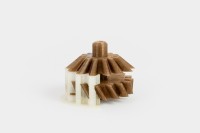
Hips. HIPS is primarily used as a break-away filament. HIPS is a polymer based on ABS-like polystyrene, with partly better mechanical properties and overall elasticity. The surface hardness of the material is high, leading to improved wear and impact resistance. Due to its properties, it can be used as a building material and as a support material for various construction materials. HIPS is well-suited for mechanical processing. As a filament, it is non-toxic, making it suitable for contact with food. HIPS is not biodegradable but is recyclable. As a support material, it can be easily removed without post-processing and ensures good dimensional accuracy and surface quality. HIPS can be used effectively with ABS, among other materials.
Special filaments

Here you will find a selection of commonly used special filaments and their properties, based on the aforementioned filaments:

Polyamide 

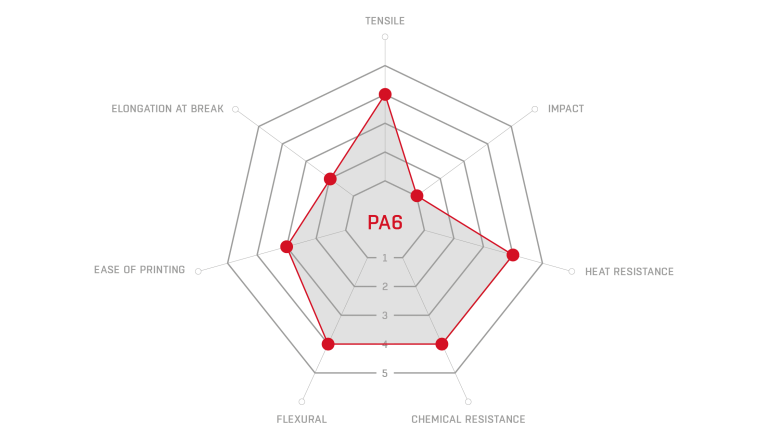
Polyamide are most commonly used for industrial applications. The main property of nylon is very good tensile strength. The material is firm and exhibits good tribological properties such as high wear resistance and a low coefficient of friction. On the other hand, it provides good elasticity of printed objects. The best-known nylon is PA6.

Resin | SLA

3D printing materials for construction, manufacturing, and product design & accessories. The selection of technical materials for the SLA process has been developed for versatility and reliability, helping you reduce costs, develop designs faster, and bring better products to market.

Simulate a full spectrum for industrial applications. Whether you want to optimise your manufacturing process, realise rapid prototyping, or assess fits and tolerances. The company Formlabs offers, for example, many excellent resins for technical applications here, which are designed to withstand extensive testing and stressful conditions.


Filament Resin

PLA simulated DRAFT

ABS simulated TOUGH

Polypropylene/High-Density Polyethylene simulated DURABLE

TPE/TPU simulated Elastic / Flexible

High temperature simulated HIGH TEMP

And simulated RIGID / DURABLE

Resin for solid & rigid components

Whether you're optimising your manufacturing process, iterating rapidly on designs, or assessing fits and tolerances, Formlabs Engineering Resins are built to withstand rigorous testing and stress. Tough 2000 Resin is the strongest and stiffest material in our Tough and Durable Resin family, in Grey. Choose Tough 2000 Resin for prototyping rigid parts that should not deform easily.

Tough 2000 Resin is ideal for:

  • Solid & rigid prototypes
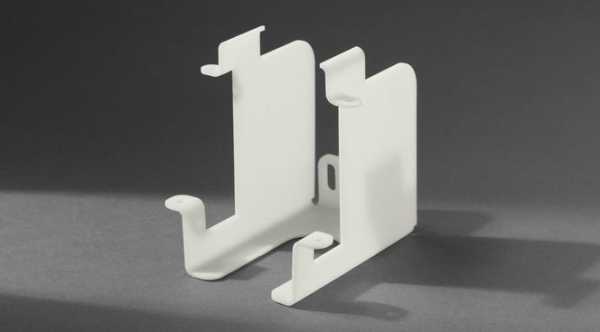
  • Brackets
  • durable components

Resin for robust prototypes

Tough 1500 Resin is the next generation of the tried-and-tested Tough. It is the most durable resin in the Tough and Draft resin family. This family comprises the most robust, functional and dynamic materials.It is particularly well suited to applications that are subjected to bending, tension, compression or impact, and which are designed to bend or deform slightly before failure occurs.Tough 1500 Resin has a tensile modulus of 1500 MPa and an elongation of 51 % under high stress or strain.

Tough 1500 Resin is ideal for:

  • Prototypes
  • Devices
  • moving components (springs)

Resin for versatile prototyping

Good elongation at break and low creep. Concept models and functional prototypes can be realised in large volumes with this material. As a universal material for functional prototyping, the Grey Pro Resin offers good elongation at break, high heat resistance and low creep.

Grey Pro Resin is ideal for:

  • Testing of fit and tolerance
  • Prototypes of injection moulded products
  • Base material for plastics, silicones and more
  • Fixtures and jigs for manufacturing

Resin for rigidity and precision

Rigid Resin is glass-filled, offering high stiffness with a flawless surface finish. Its high dimensional stability makes it ideal for printing thin walls and details. Rigid Resin has the highest Young's Modulus of all Formlabs materials and is characterised by high impact resistance, heat resistance and dimensional stability. Polypropylene-like and tough resins, on the other hand, are less brittle.

Rigid Resin is ideal for:

  • Turbine and fan blades
  • Holders, fixtures and toolmaking
  • Distributor
  • Electrical enclosures and automotive housings

Resin for minimal friction

With a low flexural modulus, high elongation, ductility, and impact resistance, Durable Resin enables printed parts with a smooth, glossy surface finish and high dimensional stability. It is ideal for applications requiring minimal friction. This polypropylene-like resin has the highest impact resistance of our engineering materials. It is characterised by a low flexural modulus, as well as high elongation at break and dimensional stability.
Durable Resin is ideal for:

  • Packaging of consumer goods
  • Bushings and bearings
  • Snap fits and flexures
  • Hinges

Resin for soft, flexible parts

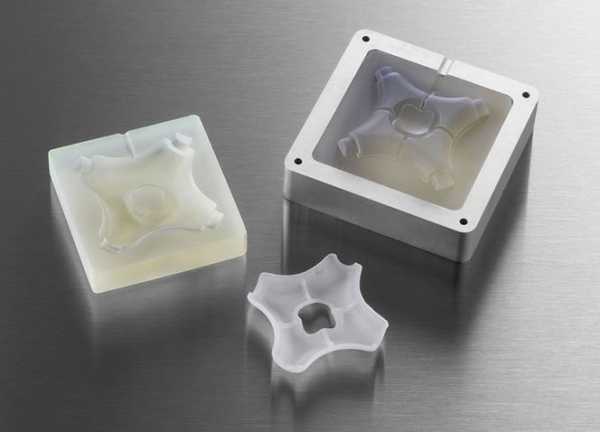
Elastic Resin is our softest engineering resin. With a Shore hardness of 50A, this material is ideal for prototyping parts typically made from silicone. Choose Elastic Resin for parts that can be repeatedly bent, stretched, and compressed without cracking. Elastic Resin is our softest engineering resin and offers a Shore hardness of 50A, with high elongation and energy return. Thanks to its high tear resistance, this material can withstand repeated load cycles.
Elastic Resin is ideal for:

  • Prototyp manufacturing of wearables and consumer goods
  • Visual medical simulation and medical devices
  • Robotics and prosthetics
  • Special effects props and models

Resin for hard, flexible parts

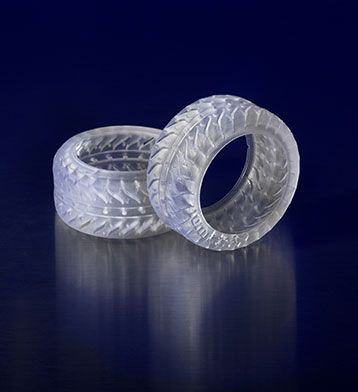
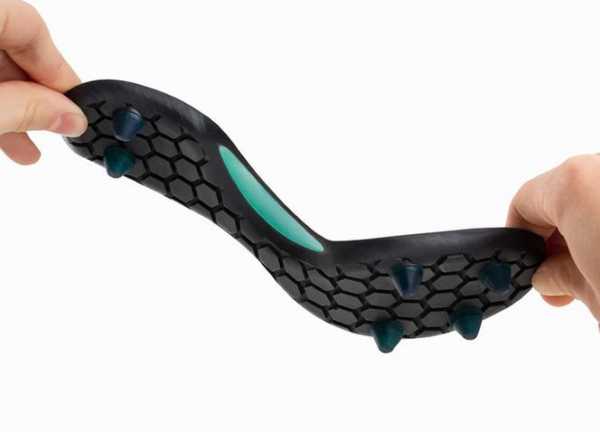
Flexible Resin is a material with a Shore hardness of 80A, suitable for stiffer flexible parts and offering a matte black, soft-touch finish. Choose Flexible Resin to create ergonomic features in larger assemblies. Flexible has a Shore hardness of 80A – close to the value of rubber types used in shoe soles or tyre treads. This material is characterised by a low tensile modulus and high elongation.
Flexible Resin is ideal for:

  • Padding and cushioning
  • Prototyp manufacturing of wearables and consumer goods
  • Grips and sheaths

Resin for high heat resistance

High Temp Resin has a Heat Deflection Temperature of 238 °C at 0.45 MPa, the highest among all Formlabs resins. Use it to print detailed, precise prototypes with high heat resistance. Materials with a high Heat Deflection Temperature exhibit less elongation.

High Temp Resin is ideal for:

  • Hot air, gas and liquid flows
  • Heat-resistant mounts, housings and fixtures
  • Shapes and inserts

Help for your decision:

Pre-sale Workshops

Secure your purchasing decision: with a guided live test of a 3D printer of your choice.

individual print patterns

Have your component manufactured on the 3D printer of your choice: upload data and get started!

Personalised advice

is our great strength – whether by phone, email, or video call: we are here for you.

Online Live Showroom

Experience live 3D printers, online or as a visitor – get talking with experts!

In-person appointment or video consultation

QUESTIONS? WE ARE PERSONALLY HERE FOR YOU.

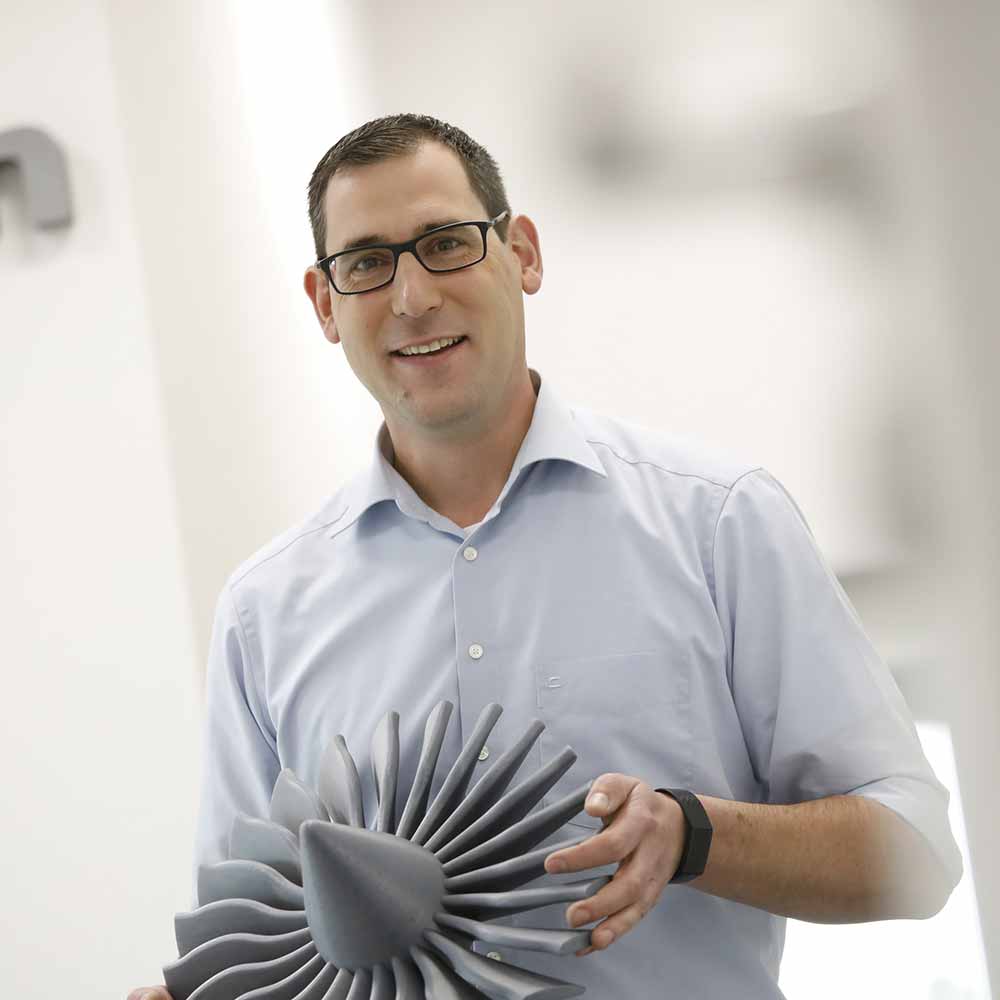
Some things are best clarified face-to-face – for instance, when it comes to plans or templates for your 3D manufacturing. Arrange your appointment here for a visit or a video call with Martin Stöcker.

Fixed-term agreement
Bild Martin Stöcker